
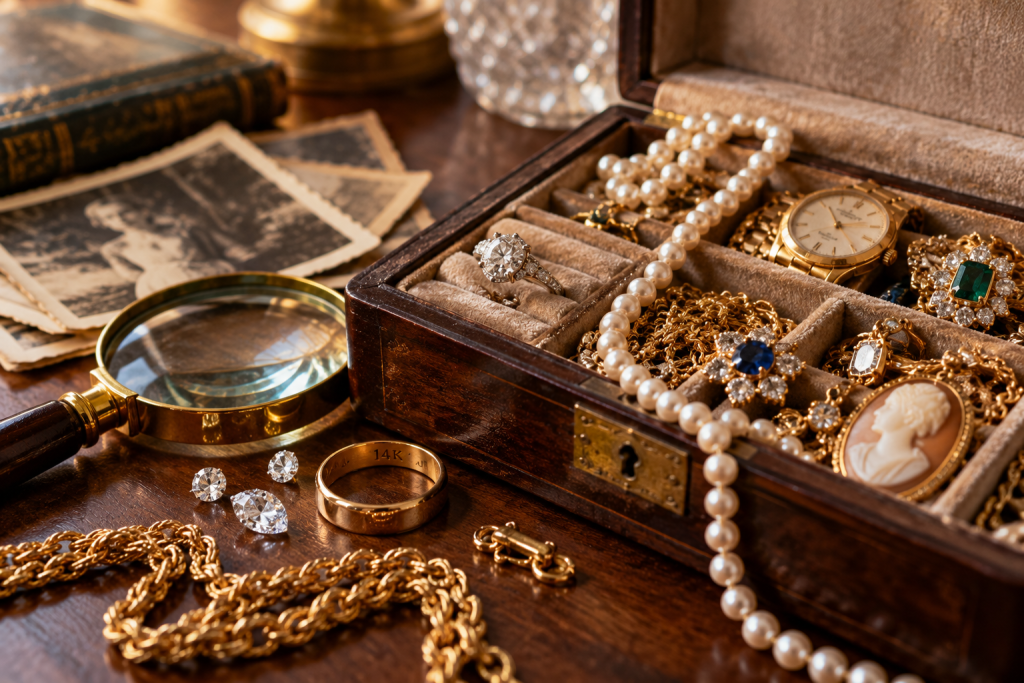
Inheriting jewelry can leave you with a lot of questions. Is that old ring real gold? Are the stones genuine? Does the name stamped inside matter? Is a piece valuable because of its age, or is most of its value simply in the gold?
Before you sell inherited jewelry, it helps to understand what can actually make a piece valuable. Sometimes an item that looks ordinary can be worth more than expected, while something elaborate may have less resale value than you might assume.
Here are a few things worth checking before making a decision.
1. Look for Hallmarks and Stamps
One of the easiest places to start is with the small markings found inside rings, on clasps, or on the backs of jewelry.
You may see markings such as:
- 10K, 14K, 18K or 22K for gold
- 925 or Sterling for sterling silver
- PT or Platinum for platinum
- A manufacturer’s or designer’s name
- Symbols or maker’s marks
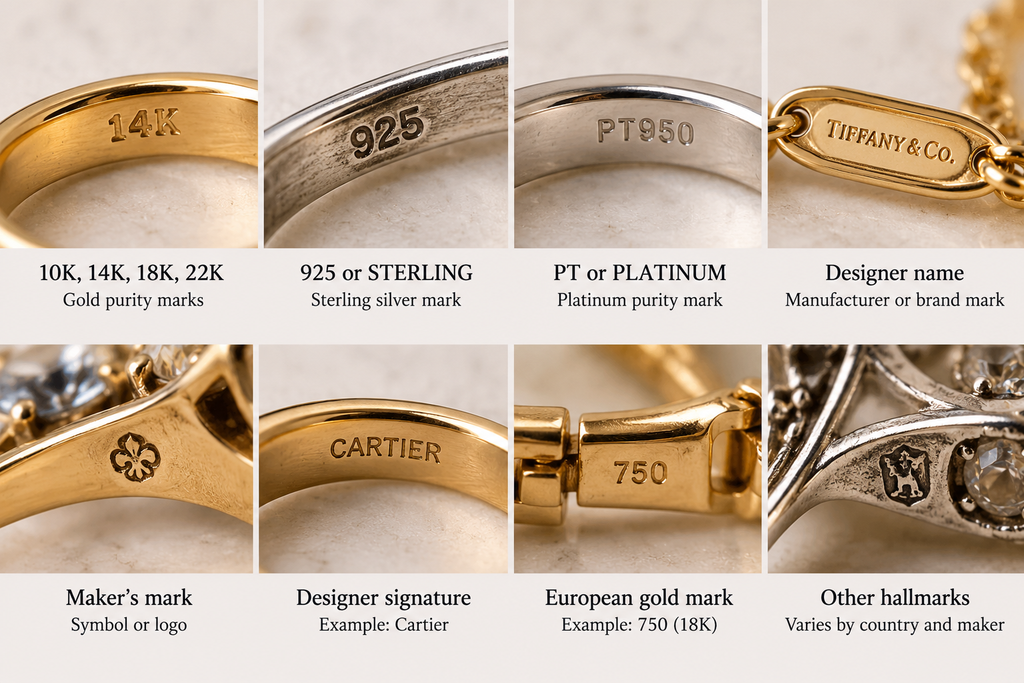
These markings can provide useful clues about the metal and manufacturer. However, a stamp alone doesn’t establish exactly what an item is worth. Condition, weight, authenticity, stones, craftsmanship and the current market can all matter.
2. Don’t Assume an Old Piece Is Just Worth Its Gold Weight
Gold content can provide a significant portion of a piece’s value, but some jewelry deserves a closer look before being valued simply for its metal.
Vintage and estate jewelry may have additional value because of its designer, craftsmanship, gemstones, rarity or desirability.
This is especially important with jewelry inherited from parents or grandparents. Before treating an older piece as scrap gold, have the entire piece evaluated.
3. Check for Designer and Maker Names
Look carefully for signatures or names on inherited jewelry.
Certain designer, luxury and vintage pieces may have a market beyond the value of their precious metals. Original boxes, receipts, certificates and other documentation are also worth keeping with the jewelry.
Don’t clean away markings or discard packaging until you know what you have.

4. Diamonds and Gemstones Can Matter
If a piece contains diamonds or colored gemstones, don’t automatically assume the setting is the only valuable part.
The type, quality, size and condition of a stone can affect its value. Larger diamonds and certain desirable gemstones deserve individual attention.
You also shouldn’t assume a stone is genuine—or worthless—based simply on how it looks. A professional evaluation can help determine what you’re actually dealing with.
5. Condition Isn’t Everything
A broken chain, missing clasp or damaged setting doesn’t necessarily mean a piece has no value.
Gold, platinum and sterling silver retain material value even when jewelry is damaged. Depending on the piece, diamonds and other stones may also retain value separately.
So if you’ve inherited a box containing broken necklaces, mismatched earrings, old rings or pieces nobody in the family wants, don’t throw them away simply because they aren’t wearable.
6. Look at the Collection as a Whole
Inherited collections often contain much more than jewelry.
Alongside rings and necklaces, families may inherit:
- Gold and silver coins
- Luxury or vintage watches
- Sterling silver flatware
- Loose diamonds and gemstones
- Designer jewelry
- Broken or unwanted gold
- Other estate pieces and collectibles
If you’re sorting through an estate, it can make sense to have everything reviewed together rather than deciding what is valuable yourself.
7. Don’t Over-Clean Jewelry Before Having It Evaluated
You don’t need to make inherited jewelry look brand new before showing it to a buyer.
Aggressive polishing, chemicals or DIY cleaning methods can potentially damage delicate pieces, gemstones, finishes or older jewelry.
A gentle wipe is generally enough. Leave extensive cleaning or restoration until you know exactly what the piece is.
8. Understand the Difference Between an Appraisal and an Offer
An insurance appraisal and the amount someone will actually pay for jewelry are not necessarily the same thing.
Insurance appraisals may reflect replacement costs, while a buyer is determining what the item is worth in the current resale, precious-metal or collector market.
If your intention is to sell, what ultimately matters is a real purchase offer and understanding what factors went into it.
Ready to Sell Your Inherited Jewelry?
Have jewelry, diamonds, watches, coins, sterling silver, or other valuables you’re ready to sell? Call Marty today for a personal evaluation and instant cash payment.
What Should You Do Before Selling Inherited Jewelry?
Take your time.
Gather the jewelry, boxes, certificates and paperwork you have. Avoid throwing away broken pieces or items you’re uncertain about, and don’t feel pressured to sell anything before you understand what you own.
A knowledgeable buyer should be willing to look through your pieces, explain what they’re seeing and let you decide what you want to do.
Have Inherited Jewelry You’d Like Marty to Look At?
I’ve been buying gold, jewelry, diamonds, watches, coins and other estate pieces for more than 25 years.
When you work with Ocean Drive Estate Buyers, you deal directly with me, Marty. I’ll take the time to look at what you’ve inherited, explain what I see and make you an offer on the pieces I’m interested in purchasing. There’s no pressure to sell.
You can meet with me in Hollywood or Boca Raton, or ask about having me come to you.
Ready to sell estate or inherited jewelry? Request a visit — you’ll deal directly with Marty.